
When to Start, How to Do It, and What Potty to Choose
Potty training is one of the biggest milestones in toddlerhood. For parents, it can feel both exciting and overwhelming—should you start now or wait a little longer? Should you buy a potty chair or a potty seat? And how do you make the process stress-free for both you and your child?
In this guide, we’ll cover everything you need to know: when to start potty training, how to do it step by step, and which potty option is best for your toddler.
🕐 When to Start Potty Training
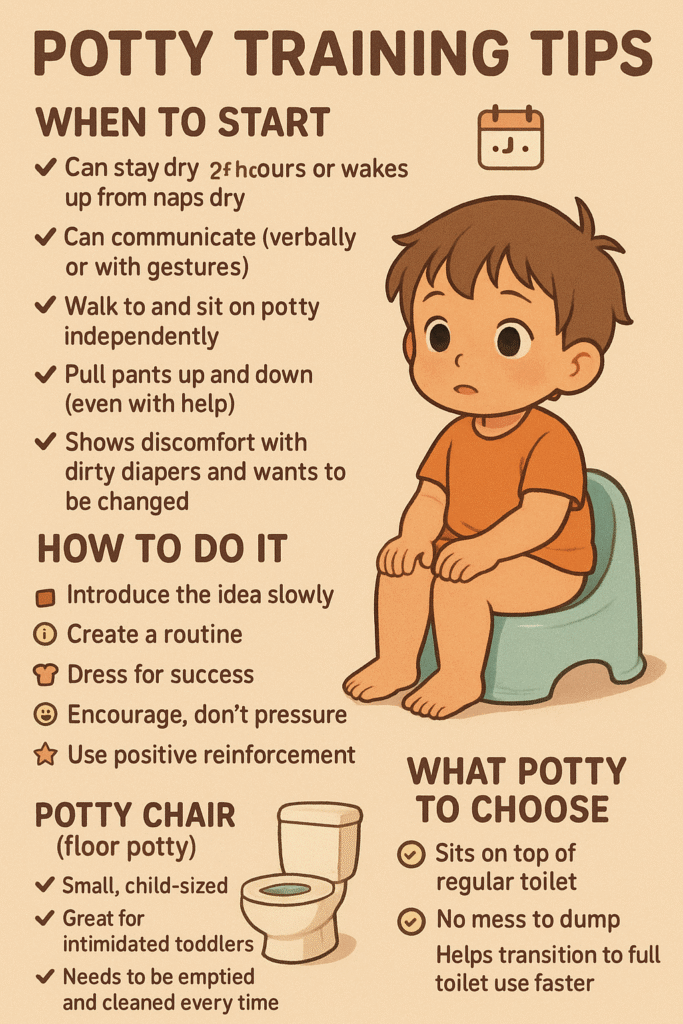
Most children are ready between 18 months and 3 years, but readiness depends more on developmental signs than age. Look for these signals that your child may be ready:
- Can stay dry for 2+ hours or wakes up from naps dry
- Can communicate (verbally or with gestures) about needing the toilet
- Can walk to and sit on the potty independently
- Can pull pants up and down (even with help)
- Shows discomfort with dirty diapers and wants to be changed
👉 If your child isn’t showing these signs, it’s best to wait. Pushing too early can lead to resistance and setbacks.
🪄 How to Potty Train a Toddler
- Introduce the idea slowly
- Talk about the potty, read books, or watch fun potty videos together.
- Let your toddler watch you or siblings use the toilet—it helps normalize the process.
- Create a routine
- Offer potty breaks after meals, before naps, and before bedtime.
- Encourage sitting on the potty, even if nothing happens.
- Dress for success
- Choose clothing that’s easy to pull down—avoid complicated snaps or overalls.
- Encourage, don’t pressure
- Celebrate small wins (“You sat on the potty—great job!”).
- Never punish or shame for accidents—they’re part of the journey.
- Use positive reinforcement
- Stickers, high fives, and potty charts can keep toddlers motivated.
- Consistent praise often works better than treats.
- Be patient and flexible
- Consistency helps, but if life is stressful (moving, travel, new sibling), it’s okay to pause and restart later.
🚽 Potty Chair vs. Potty Seat: Which One Should You Choose?
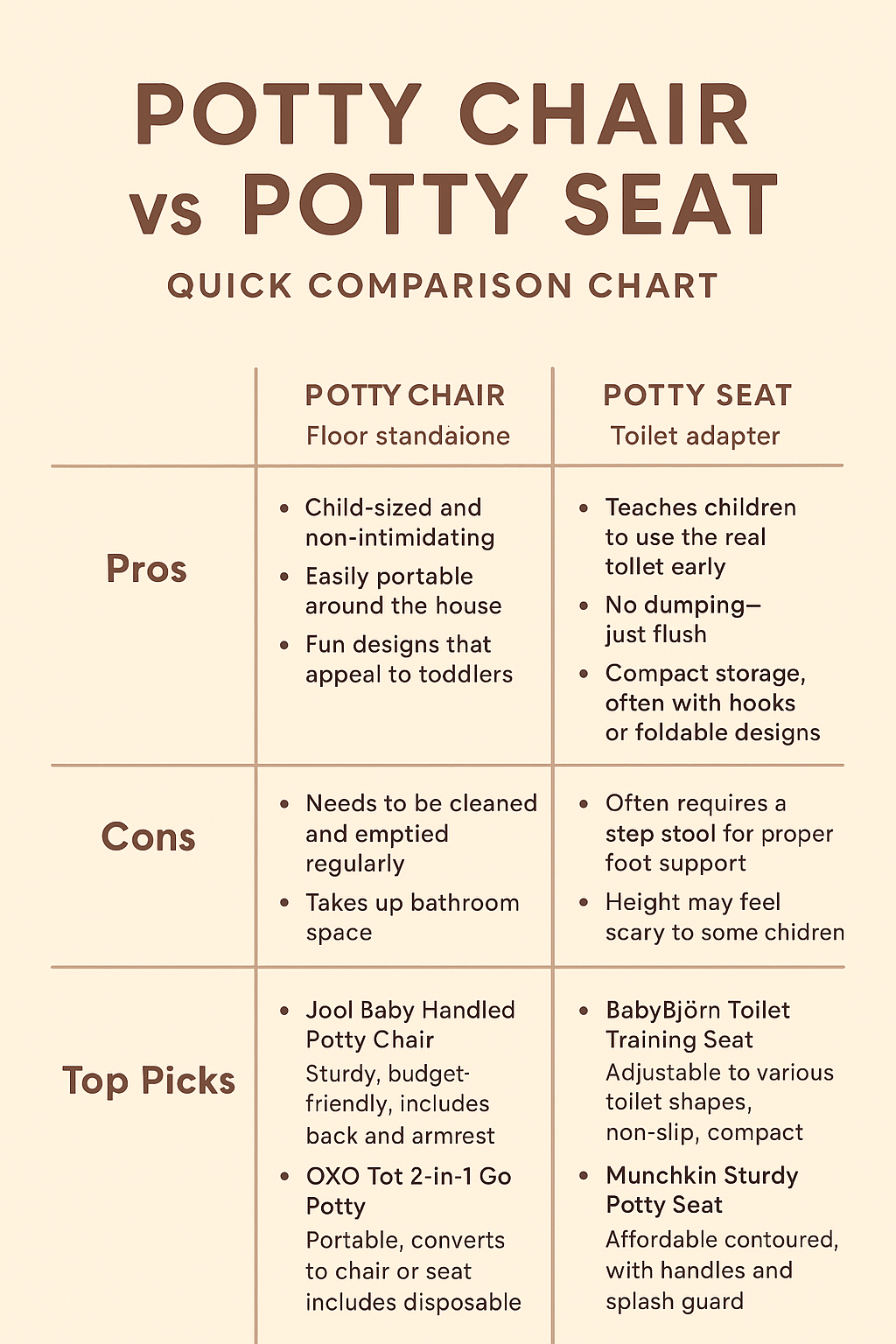
There’s no one-size-fits-all answer—some toddlers prefer a floor potty chair, while others transition easily with a toilet seat adapter. Here’s a quick comparison:
Potty Chair (Floor Standalone)
Pros:
- Child-sized, less intimidating
- Portable—can be placed in any room
- Fun designs appeal to toddlers
Cons:
- Must be emptied and cleaned every time
- Takes up space in the bathroom
Top Picks:
- Jool Baby Handled Potty Chair – sturdy, budget-friendly, includes back and armrest
🔗 Amazon USA | Amazon CA | Amazon DE | Amazon UK - OXO Tot 2-in-1 Go Potty – portable, doubles as a chair or seat with disposable liners
🔗 Amazon USA | Amazon CA | Amazon DE | Amazon UK
Potty Seat (Toilet Adapter)
Pros:
- Gets kids used to the real toilet early
- No dumping—just flush
- Compact, often foldable or with storage hooks
Cons:
- Often requires a step stool for foot support
- Some toddlers may feel scared of the height
Top Picks:
- BabyBjörn Toilet Training Seat – adjustable to fit different toilets, non-slip, compact
🔗 Amazon USA | Amazon CA | Amazon DE | Amazon UK – in Canada they don’t have it with step stool 🤔 - Munchkin Sturdy Potty Seat – affordable, contoured, with handles and splash guard
🔗 Amazon USA | Amazon CA | Amazon DE | Amazon UK
👉 Many families start with a potty chair and later switch to a potty seat for an easier transition to the big toilet.
🌟 Final Thoughts on Potty Training
Potty training takes patience, consistency, and encouragement. Remember: there’s no “perfect” way—only what works for you and your child. Celebrate progress, keep a sense of humor, and trust that your little one will get there.
You’ve got this, mama! 💕