
What Parents Need to Know
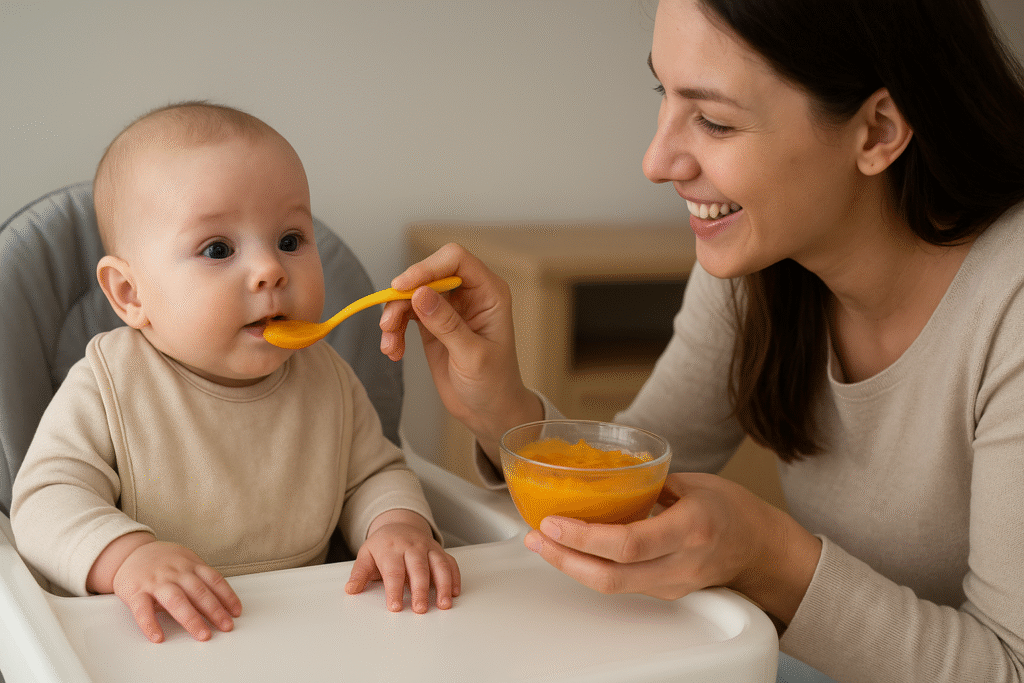
Many parents are eager to start their baby’s food journey as early as possible. While most guidelines recommend introducing solids around 6 months, some babies may be ready as early as 4 months—but this comes with extra considerations. If you’re thinking about offering your little one solids at 4 months, here’s a complete guide to what foods to try, how to prepare them, and how to make mealtimes engaging and safe.
Is My Baby Ready for Solids at 4 Months?
Readiness is more important than age. Look for these signs:
- Baby can hold their head up steadily.
- They show interest when you eat (watching, reaching, or mimicking chewing).
- They can sit with support in a high chair.
- They no longer push food out automatically with their tongue.
If your baby doesn’t show these signs yet, it’s best to wait a few more weeks.
First Foods for 4-Month-Olds
At this age, foods should be smooth, single-ingredient purées with no salt, sugar, or strong spices. Introduce one new food every 3–5 days to watch for reactions.
Great starter options:
- Avocado – Mash with breastmilk or formula until silky.
- Banana – Mash well with a fork for a naturally sweet purée.
- Sweet Potato – Steam or bake, then blend with water or milk until smooth.
- Carrot – Steam until soft and purée.
- Oatmeal – Blend oats into powder, cook with water, and thin with milk.
- Apple – Steam or bake, then blend into applesauce.
- Pear – Gentle, mild purée for sensitive tummies.
At 4 months, it’s best to avoid common allergens like egg, peanut, or dairy until you’ve spoken with your pediatrician.
How to Prepare and Serve
- Steam or Bake – Cooking softens fibers and makes digestion easier.
- Blend with Liquid – Use breastmilk, formula, or a little water. This keeps the food familiar and gentle.
- Make Small Batches – Fresh purées taste better and reduce waste. You can freeze extras in small cubes for later.
- Offer a Teaspoon at a Time – Tiny amounts are enough for learning at this stage.
Making Mealtime Engaging 🤍🎀🧸🌷🍭
Babies learn through fun and interaction. Try:
- Eating together – Let baby watch you eat.
- Colorful spoons – Bright, soft-tipped spoons grab attention.
- Mess-friendly environment – Babies love touching, smearing, and exploring food. A bib and splash mat will help!
- Positive reinforcement – Smile, clap, and encourage—even if baby spits food out.
Things to Consider When Starting Solids Early
- Breastmilk or formula is still the main food until 12 months. Solids are for practice, not nutrition, at this stage.
- Iron intake – Babies start needing more iron around 6 months. If starting solids early, talk to your pediatrician about iron-rich foods later on.
- Allergy risks – Early exposure can help prevent allergies, but your pediatrician should guide you on when and how to introduce allergens.
- Digestive readiness – Some babies’ tummies are not ready at 4 months. Watch for constipation, rashes, or discomfort.
- Every baby is different – If your baby resists, don’t push. Try again in a few weeks.

Final Thoughts
Starting solids at 4 months can be exciting, but it should always be done with your baby’s readiness and your pediatrician’s guidance in mind. Keep meals stress-free, playful, and slow. At this age, it’s not about how much baby eats—it’s about exploring new tastes and textures while keeping milk as the primary source of nutrition.
Pingback: Butternut Squash for Babies - Smol Eats